Utterwove
How to apply this guide
Understand why a speech detector can speed up long recordings and why quiet phrases still need checking.
Start with
Use a short file with a clear opening, a long gap and a quiet reply. Compare runs with and without speech detection if the tool exposes the option. Check the quiet reply and the final phrase against the audio.
Check before you finish
The upstream whisper.cpp settings are not automatically exposed by every app. Use only the options offered by your selected tool and verify results before using them for long recordings.
Evidence to keep: Keep the target field open and verify that the complete reviewed result reached the intended destination. This page’s key limit is: Understand why a speech detector can speed up long recordings and why quiet phrases still need checking.
Start here
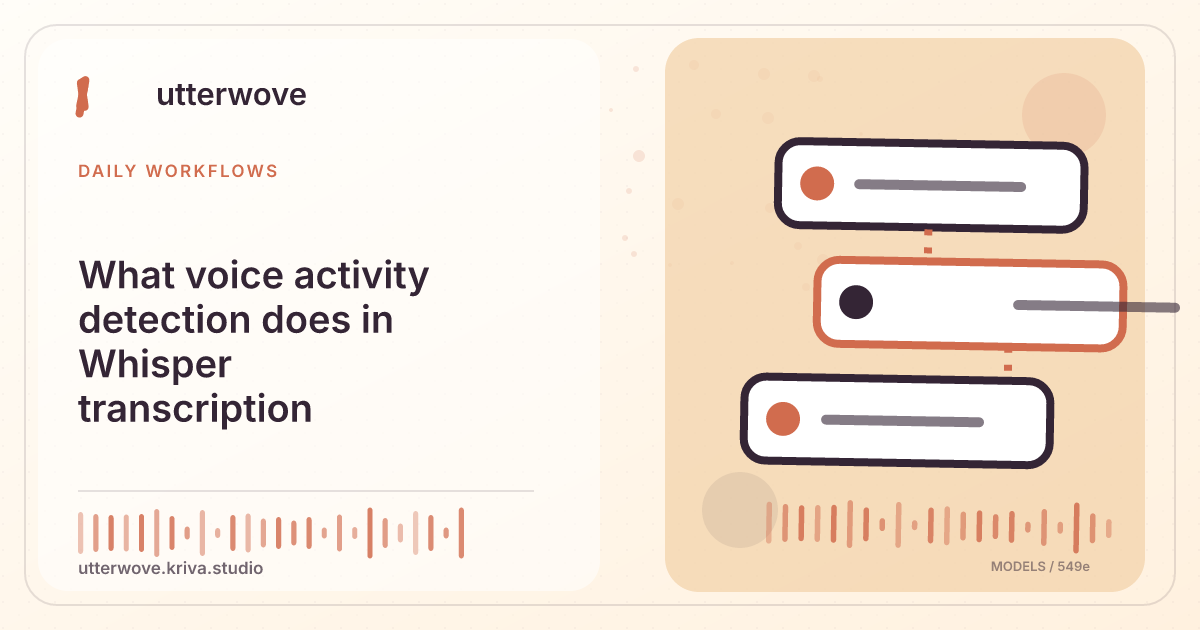
Voice activity detection marks portions of audio that are likely to contain speech. Some Whisper workflows use those marks to skip silence or divide long inputs, so the decoder spends less time on empty audio.
Test a known quiet passage
Use a short file with a clear opening, a long gap and a quiet reply. Compare runs with and without speech detection if the tool exposes the option. Check the quiet reply and the final phrase against the audio.
Treat detection and recognition separately
If a segment was skipped, the language model had no words to decode there. A clearer speech channel or a change to your tool’s detection settings may help. Keep the original and note which stage omitted the words.
Check controls for your edition
The upstream whisper.cpp settings are not automatically exposed by every app. Use only the options offered by your selected tool and verify results before using them for long recordings.